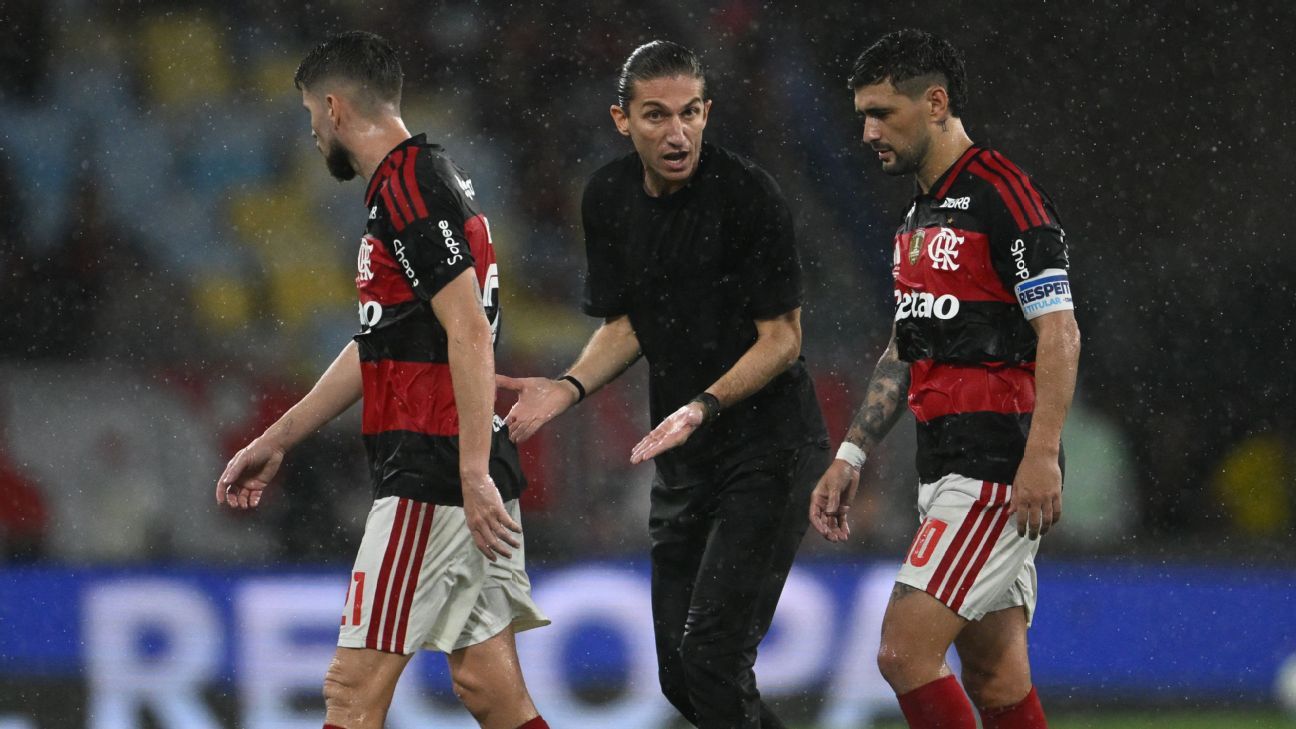
The Shocking Premise: Winning 8-0 Then Sacked – The Unfathomable Exit of Filipe Luís from Flamengo
In the unpredictable world of professional football, where success often dictates tenure, certain events stand out for their sheer incredulity. The recent departure of técnico Filipe Luís from Flamengo is one such narrative, a story so bizarre it borders on fiction. Imagine orchestrating an emphatic 8-0 victory, leading your team to a major final, and then, less than 24 hours later, being relieved of your duties. This wasn't a cruel joke; it was the abrupt reality faced by one of Brazilian football's most respected figures, sending shockwaves through the sport and leaving fans and pundits alike scratching their heads.
The incident highlights the volatile nature of modern football management, where even monumental wins offer no guarantees. For Filipe Luís, a man celebrated for his tactical astuteness and tireless dedication as a player, his fledgling managerial career at Flamengo took an unexpected and brutal turn, challenging the conventional wisdom that results speak for themselves. This article delves into the circumstances surrounding this bewildering dismissal, examining the legacy of Filipe Luís and exploring the deeper implications of such a drastic decision in the high-stakes arena of elite football.
From Tireless Left-Back to Aspiring Manager: The Enduring Legacy of Filipe Luís
Before donning the manager's tactical vest, Filipe Luís Kasmirski carved out an illustrious career as a professional footballer. Born on August 9, 1985, his journey through European football was marked by a relentless work ethic and an exceptional understanding of the game, qualities that made him a standout left-back. His early professional years saw him establish himself in Spain with Deportivo, where he spent four seasons, honing his defensive prowess and offensive contributions.
His move to Atlético Madrid in 2010 truly elevated his status. Under the tutelage of Diego Simeone, Filipe Luís became an integral part of an Atlético side that defied expectations, winning an impressive array of trophies. His haul included the La Liga championship in 2014, two Europa League titles, a Copa del Rey, and a UEFA Super Cup. His consistent performances, combined with his tactical awareness and leadership qualities, earned him a move to English giants Chelsea in July 2014 for £15.8 million. There, he added a Premier League title and a League Cup to his burgeoning collection, further cementing his reputation as a serial winner.
Filipe Luís was not merely a player of exceptional skill; he was a footballing intellectual, known for his ability to read the game, anticipate opponents, and execute tactical instructions flawlessly. These attributes naturally earmarked him as a prime candidate for a successful transition into management. His return to Flamengo as a player saw him continue his winning ways, making him a beloved figure at the club. The announcement of his appointment as técnico Filipe Luís was met with considerable excitement, with many believing his deep understanding of the club's culture and his vast playing experience would provide a seamless bridge to a thriving managerial career. Fans envisioned a manager who understood the fabric of the club, a rare asset in today's transient football landscape.
Unpacking the Flamengo Exit: More Than Just Results?
The core of this perplexing story lies in the immediate aftermath of an extraordinary on-field achievement. Flamengo, under técnico Filipe Luís, delivered a stunning 8-0 victory, a scoreline that typically signals dominance and managerial security. This triumph propelled them into the Carioca final, a significant milestone that should have, by all conventional measures, solidified his position, at least temporarily. Instead, the shocking news arrived less than 24 hours later: Filipe Luís was out.
This unprecedented timing begs the question: What truly transpired behind the scenes? Such a swift and decisive action, especially following a resounding success, suggests that the decision to part ways with Filipe Luís was likely pre-meditated, perhaps irrespective of the 8-0 scoreline or qualification for the final. Several factors could contribute to such a dramatic and seemingly illogical outcome:
- Long-Term Vision Discrepancies: It's plausible that despite short-term results, there was a fundamental misalignment between Filipe Luís's long-term tactical philosophy or squad development plans and the club's overarching strategic vision. Clubs often prioritize a specific style of play, youth integration, or financial prudence that might clash with a manager's approach.
- Internal Politics and Power Struggles: Football clubs, particularly large ones like Flamengo, are complex organizations rife with internal politics. Decisions can sometimes be influenced by powerful board members, sporting directors, or even influential player agents, creating an environment where a manager's position is precarious regardless of on-field performance.
- Pre-Existing Agreements: There might have been an external factor at play, such as the club already having an agreement in principle with another manager, with the 8-0 win simply delaying the inevitable announcement by a few hours. The timing suggests that the decision was already made and merely executed at the soonest convenient (or inconvenient) moment.
- Player Relations or Disciplinary Issues: While less publicly known, underlying issues with player morale, disciplinary control, or key dressing room figures could subtly erode a manager's authority, even if not immediately evident in results.
- Unrealistic Expectations: Flamengo is a club with immense pressure for continuous success. While an 8-0 win is impressive, perhaps the overall trajectory or performance levels leading up to that game were not deemed sufficient by a demanding board or fan base.
For a deeper dive into these complexities, exploring the layers beyond mere match outcomes is essential. The article Beyond the Carioca Final: Unpacking Filipe Luís' Abrupt Flamengo Departure offers further insights into the intricate factors at play.
The Broader Implications: Navigating Modern Football Management
The case of técnico Filipe Luís at Flamengo is a stark reminder of the unforgiving nature of modern football management. It illustrates a growing trend where the demand for instant gratification often trumps long-term planning and patience. Even legendary players transitioning into coaching roles find themselves on a short leash, with their playing prestige offering minimal protection from the managerial axe.
For aspiring managers, this incident serves as a crucial cautionary tale. It underscores the importance of not only delivering results but also navigating the intricate web of club politics, aligning with the club's hierarchy, and cultivating strong relationships beyond the training ground. A clear managerial philosophy, robust communication skills, and an understanding of the club's specific ecosystem are arguably as important as tactical acumen.
From the perspective of clubs, this rapid turnover, even after successes, often raises questions about stability and vision. While the pursuit of excellence is understandable, such abrupt decisions can disrupt squad cohesion, hinder long-term development, and alienate fan bases who often appreciate continuity. Practical advice for clubs aiming to foster a more stable environment might include:
- Establishing Clear Managerial Mandates: Define realistic expectations and a clear project timeline from the outset.
- Open Communication Channels: Maintain transparent and consistent dialogue between the board, sporting director, and manager.
- Patience and Support: Understand that building a successful team takes time. Support a manager through difficult patches rather than reacting impulsively.
- Evaluating Beyond Immediate Results: Consider factors like player development, tactical progression, and club culture integration, not just the win-loss record.
The journey of a player like Filipe Luís, from the pinnacle of playing success to the turbulent waters of management, is a testament to the allure and challenges of the dugout. To understand the full scope of his career transition and the underlying complexities, read more about Filipe Luís' Journey: From Champion Player to Managerial Turmoil at Flamengo.
The Flamengo saga with técnico Filipe Luís epitomizes the high-stakes, high-pressure environment where emotions and commercial interests often override logical footballing decisions. It's a landscape where an 8-0 victory can be a fleeting moment of joy, quickly overshadowed by the harsh realities of the club's boardroom.
The shocking exit of Filipe Luís from Flamengo, immediately following an overwhelming 8-0 triumph and qualification for the Carioca final, will undoubtedly be etched in football folklore as one of the most perplexing managerial dismissals. It throws a stark spotlight on the complex interplay of performance, politics, and expectations that define modern football. While the full, unvarnished truth behind the decision may never be publicly revealed, the incident serves as a poignant reminder that in this beautiful yet brutal game, even monumental success can sometimes be tragically short-lived. For Filipe Luís, a decorated player and an aspiring manager, this chapter closes abruptly, but his journey in the coaching world is surely far from over, and the lessons learned from this unparalleled experience will undoubtedly shape his future endeavors.